Genus Spheniscus
Galápagos Penguin
ガラパゴスペンギン Spheniscus mendiculus
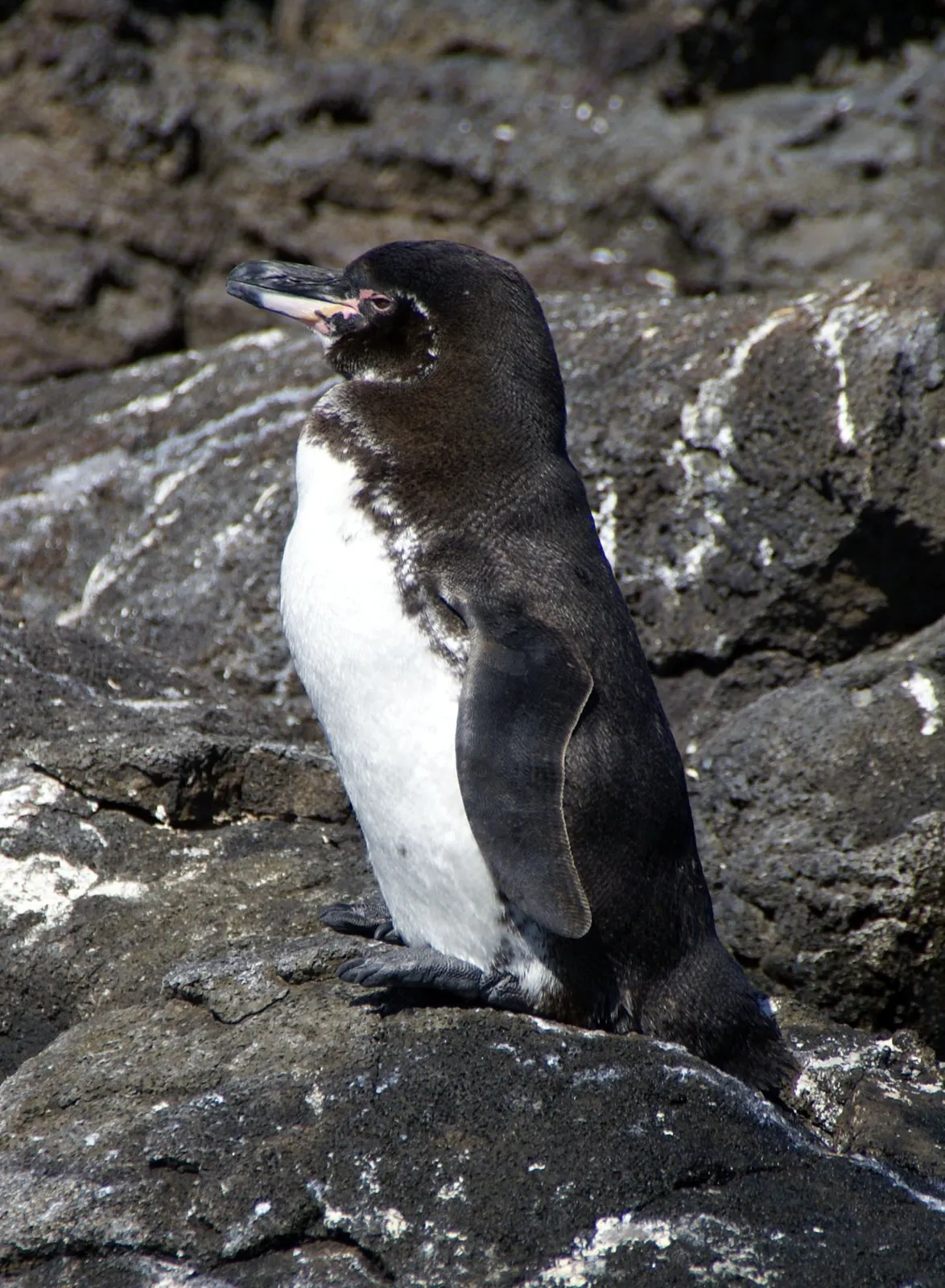
About
A small black-and-white penguin about 53 cm long. A white border runs from behind the eye around the ear-coverts and chin to join on the throat, and two black bands cross the whitish breast, the lower one extending down the flanks to the thigh. It is the most northerly breeding penguin and breeds throughout the year, coinciding with increased upwelling.
Key facts
- Scientific name
- Spheniscus mendiculus
- Conservation status (IUCN)
- Endangered (EN) (assessed 2020)
- Population trend
- Decreasing
- Population
- About 1,200 mature individuals (as of 2007)
- Length
- about 53 cm Compare with other species
- Range
- Endemic to the Galápagos archipelago, Ecuador, breeding on Isabela, Fernandina, Floreana and Santiago islands and several offshore islets. About 95% of the population is on Isabela and Fernandina in the west.
Threats
- In El Niño years the sea warms and the fish disappear. Numbers fell by 77% in 1982–83.
- Some drown after getting caught in fishing nets near the coast.
- Cats, rats and dogs brought by people kill them, and a single feral cat once killed many adults.
- Mosquitoes that arrived with people can spread avian malaria.
Conservation work
- Every bird lives inside the national park and marine reserve, where access to nesting sites is strictly controlled.
- Nests built from lava rock give them safe places to breed, and introduced predators are being removed.
Where to see the Galápagos Penguin in Japan
None of the places listed on PenguinSpot keep the Galápagos Penguin.