Genus Aptenodytes
Emperor Penguin
コウテイペンギン Aptenodytes forsteri
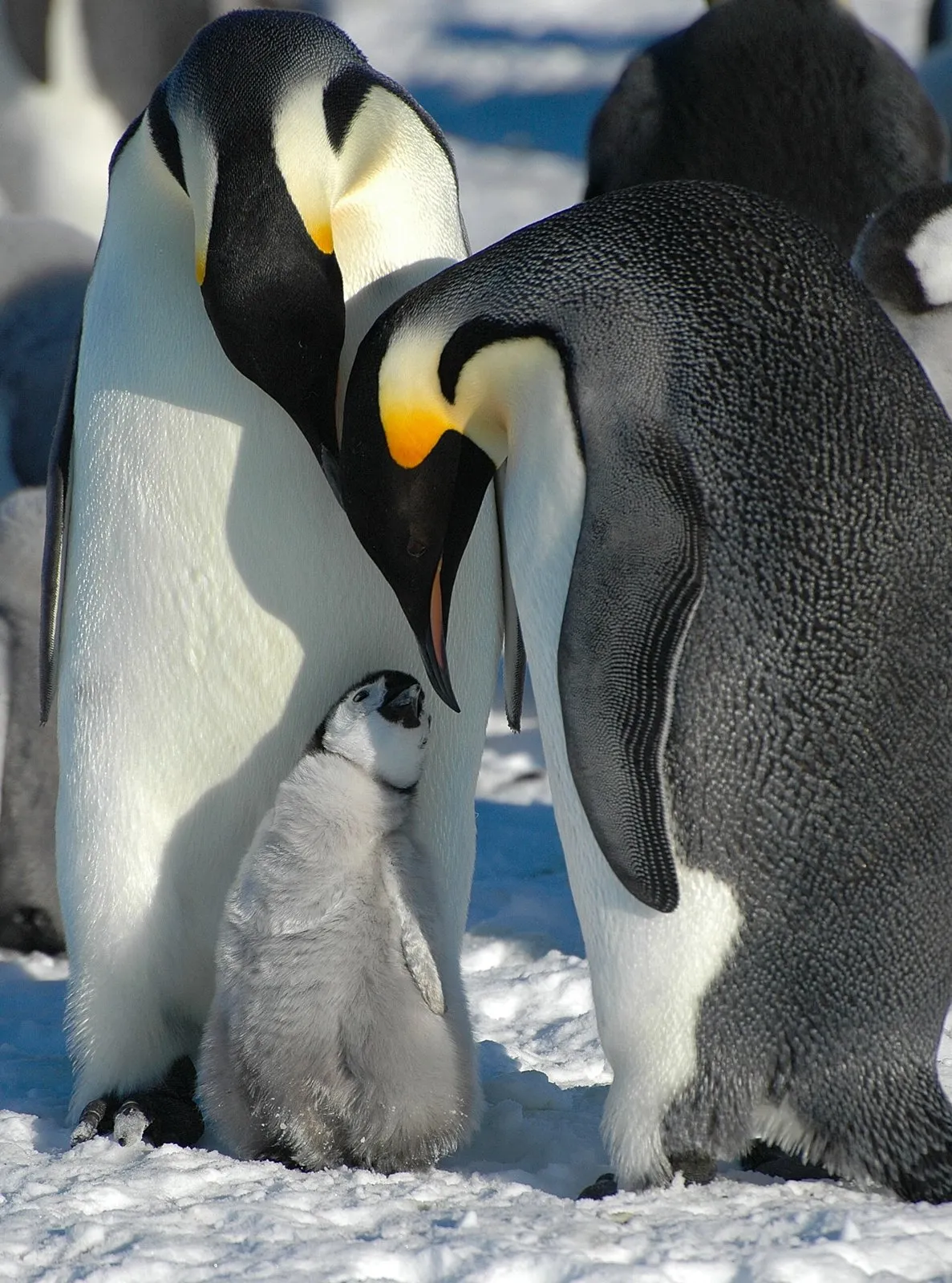
About
A penguin much larger and heavier than the King Penguin. It spends its whole life in the Antarctic, generally in association with sea ice, and breeds through the austral winter on coastal land-fast ice. Eggs are laid in May to June and hatch after about 65 days.
Key facts
- Scientific name
- Aptenodytes forsteri
- Conservation status (IUCN)
- Endangered (EN) (assessed 2026)
- Population trend
- Decreasing
- Population
- About 256,500 breeding pairs
- Standing height
- about 115 cm Compare with other species
- Range
- Breeds in about 54 colonies around the entire coast of Antarctica, with the largest colonies in the Ross Sea and Weddell Sea.
Threats
- Sea ice breaks up before the chicks can swim, and they die. In 2022, four of five colonies west of the Antarctic Peninsula raised no chicks at all.
- They cannot climb steep slopes with eggs or chicks, so when the ice goes there are few other places to breed.
- Less ice could change currents and reduce their food, and fishing for krill could harm them if poorly managed.
Conservation work
- Some colonies are protected as Antarctic Specially Protected Areas or inside the Ross Sea Marine Protected Area.
- IUCN says the most important step is a sharp cut in greenhouse gas emissions.